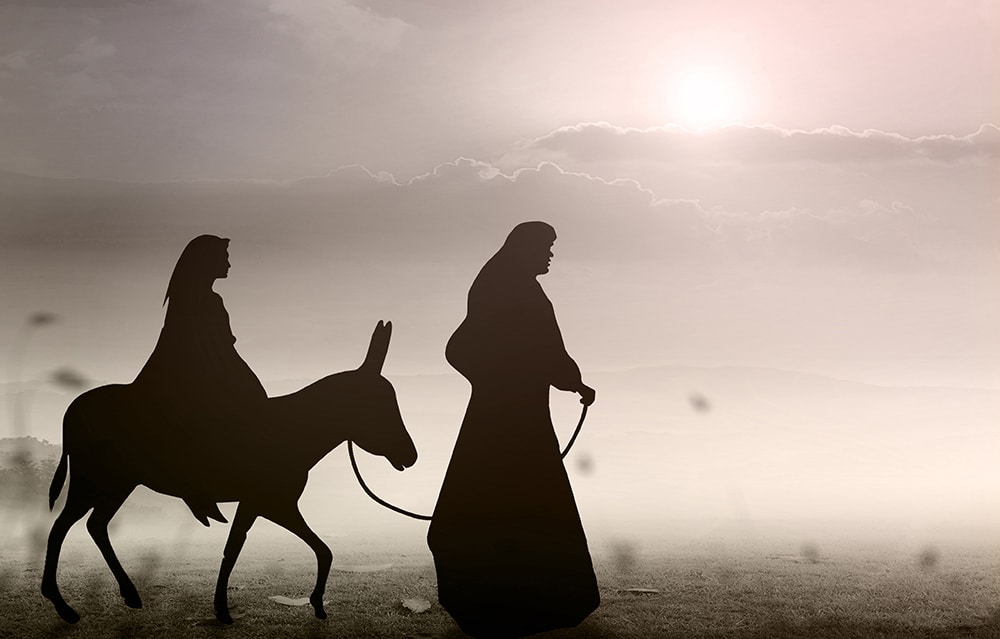
The story of the Nativity is deeply etched into the fabric of human history, a tale of divine intervention and humble beginnings. Central to this narrative is the pivotal journey undertaken by Mary and Joseph. Many often wonder, why did Mary and Joseph travel to Bethlehem, a seemingly arduous trip for a woman in her late pregnancy? Their journey was not merely a matter of personal choice but was meticulously orchestrated by both imperial decree and ancient prophecy, ensuring that the Messiah would be born in the ancestral city of David. This profound event answers the question of why did Mary and Joseph travel to Bethlehem, linking it inextricably to the fulfillment of sacred scriptures.
The Roman Decree and the Imperial Census
The immediate catalyst for Mary and Joseph’s relocation to Bethlehem was a widespread governmental mandate issued by the Roman Empire. This decree, under the authority of Emperor Augustus, required all citizens to register in their ancestral towns for a census, primarily for taxation purposes.
Emperor Augustus’s Mandate for Registration
Emperor Caesar Augustus, the powerful ruler of the Roman Empire, issued an edict that required everyone to return to their hometowns to be counted and registered. This was a common practice for Roman administration, designed to keep accurate records of the population, which in turn facilitated more efficient tax collection and military recruitment. For Joseph, a descendant of King David, this meant a compulsory journey to the small town of Bethlehem, David’s birthplace.
Joseph’s Ancestral Lineage and the Call to Bethlehem
Joseph’s deep roots in the lineage of King David directly linked him to Bethlehem of Judea. According to Jewish custom and Roman law concerning ancestral registration, he was required to present himself there. This presented a significant challenge, as Mary was heavily pregnant and their home was in Nazareth, a considerable distance away.
- The census was a mandatory civic duty, not an option.
- Joseph’s specific ancestry dictated his destination.
- The journey was undertaken despite Mary’s advanced condition.
Prophetic Fulfillment: A Divine Blueprint
Beyond the immediate Roman decree, the journey to Bethlehem held a much deeper, theological significance. It was the precise fulfillment of ancient prophecies foretelling the birthplace of the Messiah.
Micah’s Prophecy: Bethlehem Ephrathah
One of the most compelling prophecies regarding the Messiah’s birthplace comes from the prophet Micah. Micah 5:2 explicitly states: “But you, Bethlehem Ephrathah, though you are small among the clans of Judah, out of you will come for me one who will be ruler over Israel, whose origins are from of old, from ancient times.” This passage unequivocally designated Bethlehem as the birthplace of the future ruler, emphasizing its seemingly humble status yet profound destiny.
The Davidic Lineage and Bethlehem’s Significance
Bethlehem, often referred to as the “City of David,” was intrinsically linked to the great King David. The prophecies indicated that the Messiah would be a descendant of David and would be born in his ancestral city. The journey of Mary and Joseph thus ensured that both the lineage and the location perfectly aligned with these centuries-old predictions.
- Bethlehem was prophesied as the Messiah’s birthplace (Micah 5:2).
- The Messiah was to be of Davidic lineage, connecting directly to Bethlehem.
- The journey ensured the fulfillment of dual prophecies: lineage and location.
The Arduous Journey Itself
The journey from Nazareth to Bethlehem was no trivial undertaking, especially for a heavily pregnant woman. It spanned approximately 90 miles (145 kilometers) over rugged terrain, likely taking several days on foot or by donkey. This arduous trip highlights the obedience and faith of Mary and Joseph as they navigated the challenges of their circumstances. The practical necessity dictated by the census, combined with the underlying divine plan, truly underscores why did Mary and Joseph travel to Bethlehem with such determination.
The Profound Significance of Bethlehem
The birth of Jesus in Bethlehem was far more than a geographical detail; it was a foundational element of his identity and mission. It connected him directly to the promised King David and affirmed his role as the long-awaited Messiah. This specific location served as a powerful symbol, linking the new covenant to the old, and demonstrating God’s meticulous plan unfolding through human events.
Frequently Asked Questions about Mary and Joseph’s Travel
Why was Bethlehem chosen as the place of birth?
Bethlehem was chosen primarily due to the prophecy of Micah 5:2, which foretold that the Messiah would be born there. Additionally, it was the ancestral home of Joseph, who was a descendant of King David, and the Roman census required him to return there for registration.
How long did the journey take?
The journey from Nazareth to Bethlehem was approximately 90 miles (145 kilometers). Traveling by foot or donkey, it would have likely taken anywhere from four to seven days, depending on the pace and any necessary stops for rest.
Was it dangerous to travel during that time?
Travel in ancient Judea could indeed be dangerous. Roads were often unpaved and susceptible to bandits. The terrain was rugged, and conditions could be harsh. However, the Roman presence generally maintained a degree of order, especially on major routes. Despite these potential dangers, Mary and Joseph undertook the journey out of necessity and faith.
Did Mary and Joseph have other children?
Biblical accounts suggest that Mary and Joseph did have other children after Jesus. The Gospels mention Jesus having brothers named James, Joseph, Simon, and Judas, and also unnamed sisters (Matthew 13:55-56, Mark 6:3). This indicates that after Jesus’ birth, Mary and Joseph had a typical marital relationship and a larger family.
In understanding why did Mary and Joseph travel to Bethlehem, we uncover a tapestry woven from historical decrees, ancient prophecies, and unwavering faith. Their journey, prompted by a Roman census and guided by divine foresight, ensured that the birth of Jesus fulfilled long-held expectations, cementing Bethlehem’s place in history as the birthplace of the Savior. This momentous trip highlights how seemingly mundane events can serve a profound, overarching purpose in the grand narrative of salvation.