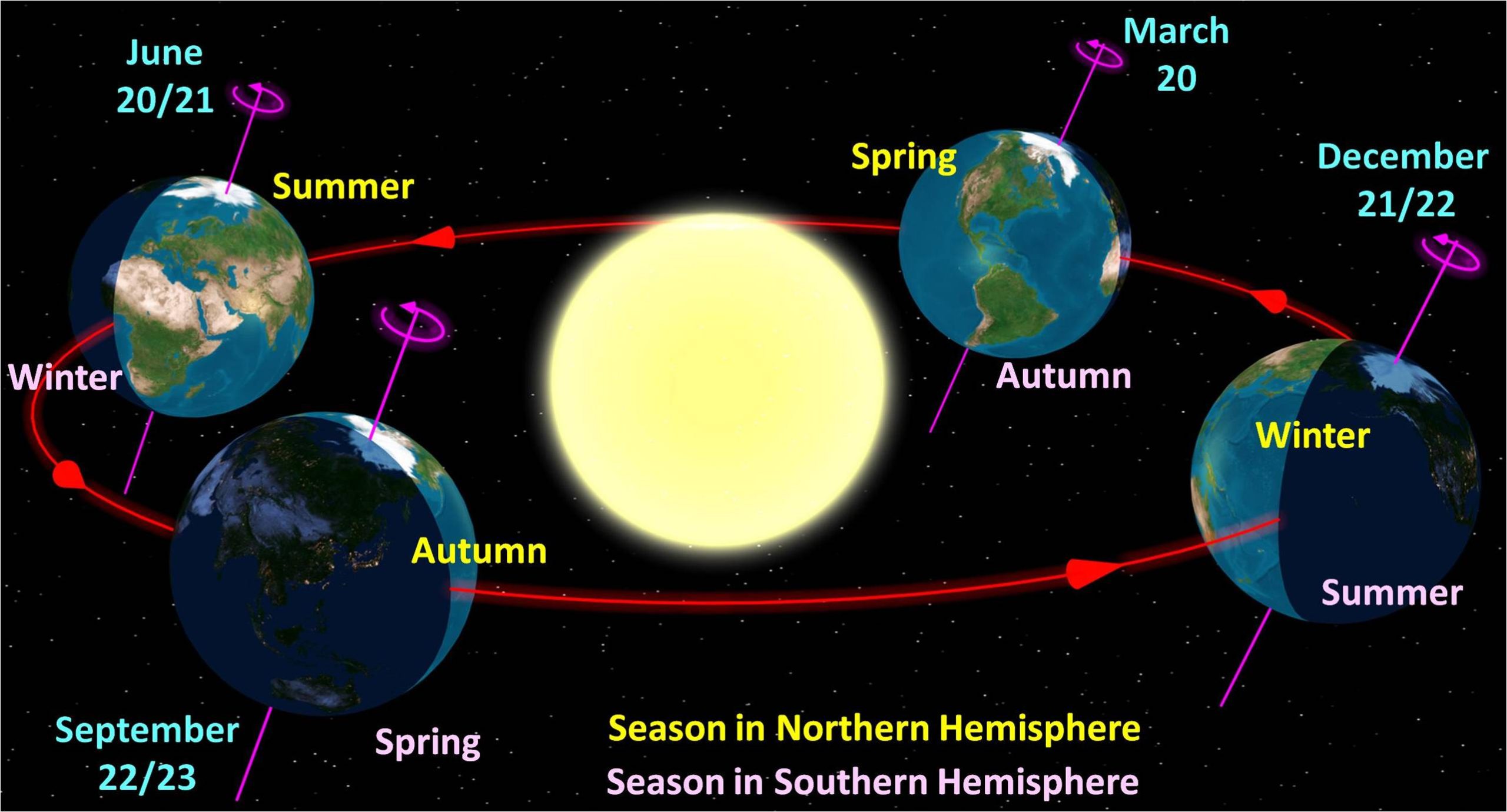
Our planet, Earth, is constantly in motion, embarking on an astonishing cosmic journey through space. Many wonder exactly how fast is Earth traveling around the sun, and the answer often surprises people with its sheer magnitude. This relentless orbital dance dictates our seasons, years, and ultimately, the conditions for life itself on our unique blue marble. Understanding this incredible velocity helps us appreciate the dynamic nature of our solar system and the universe beyond.
Understanding Earth’s Orbital Velocity
Earth’s primary motion around the Sun is not just a gentle drift; it’s a high-speed pursuit. Our planet travels along an elliptical path, meaning its speed varies slightly throughout the year. However, on average, Earth zips around the Sun at an astounding pace.
The Mechanics Behind Earth’s Rapid Travel
The speed at which Earth orbits the Sun is a delicate balance of gravity and inertia. The Sun’s immense gravitational pull continuously tugs on Earth, preventing it from flying off into deep space. Simultaneously, Earth’s own inertia (its tendency to stay in motion) keeps it from plummeting directly into the Sun. This celestial tug-of-war results in a stable, albeit incredibly fast, orbit.
- Average Speed: Approximately 108,000 kilometers per hour (67,000 miles per hour);
- Speed per second: This translates to about 30 kilometers per second (18.5 miles per second).
- Comparison: To put this into perspective, a commercial jet flies at around 900 km/h (560 mph), and even a rifle bullet travels at less than 2,000 km/h (1,200 mph). Earth’s orbital speed dwarfs these figures by orders of magnitude.
Why Don’t We Feel Our Planet’s Speed?
Given that we’re moving at such an incredible velocity, it’s a perfectly valid question to ask why we don’t feel dizzy or experience any sensation of motion. The reason is simple: everything on Earth – including us, the atmosphere, and all objects – is traveling at the same constant speed. We are all moving together as part of the same system, much like passengers on a smoothly flying airplane.
- Constant Velocity: As long as the speed and direction remain relatively constant, we don’t perceive the motion. It’s only when there’s an acceleration (speeding up), deceleration (slowing down), or a change in direction that we sense movement.
- Inertial Frame of Reference: Earth provides our stable frame of reference. From our perspective, we are stationary, and the rest of the universe appears to move around us, even though we are rapidly hurtling through space.
It’s fascinating to ponder how fast is Earth traveling around the sun when considering the tranquility of our everyday lives. This constant, high-speed journey is a testament to the elegant laws of physics governing our cosmos.
Earth’s Other Cosmic Journeys
While orbiting the Sun is Earth’s most significant motion, it’s far from its only one. Our planet is engaged in multiple layers of movement, each contributing to its complex path through the universe.
Rotation on Its Axis
In addition to its orbital journey, Earth spins on its own axis. This rotation is what gives us day and night, completing one full turn approximately every 24 hours. At the equator, this rotational speed is roughly 1,670 km/h (1,037 mph), decreasing to zero at the poles.
The Sun’s Galactic Orbit
Our Sun, along with Earth and all the other planets in our solar system, is also orbiting the center of the Milky Way galaxy. This journey is even grander, with our entire solar system traveling at an estimated speed of about 828,000 km/h (514,000 mph). It takes our solar system roughly 230 million years to complete one full orbit around the galactic center.
Frequently Asked Questions About Earth’s Orbital Speed
Q: Does Earth’s speed around the Sun ever change?
A: Yes, Earth’s speed varies slightly. Because its orbit is elliptical, Earth moves faster when it’s closer to the Sun (perihelion) and slower when it’s farther away (aphelion).
Q: If Earth stopped orbiting, what would happen?
A: If Earth suddenly stopped its orbital motion, the Sun’s gravity would pull it directly inwards, causing it to fall into the Sun. This scenario, however, is not physically possible under normal circumstances.
Q: How long does it take for Earth to complete one orbit?
A: It takes approximately 365.25 days for Earth to complete one full orbit around the Sun, which is what defines a year.
Q: Is the speed constant throughout the year?
A: No, as mentioned, the speed varies. Earth is fastest around early January and slowest around early July.
The question of how fast is Earth traveling around the sun unveils a mesmerizing aspect of our existence, reminding us that we are all passengers on a truly extraordinary cosmic voyage. This constant, high-speed motion, coupled with Earth’s rotation and the solar system’s galactic journey, paints a picture of a dynamic and constantly moving universe. It’s a profound thought that beneath our calm daily routines, we are all hurtling through space at speeds that defy imagination, a silent testament to the grandeur of the cosmos.