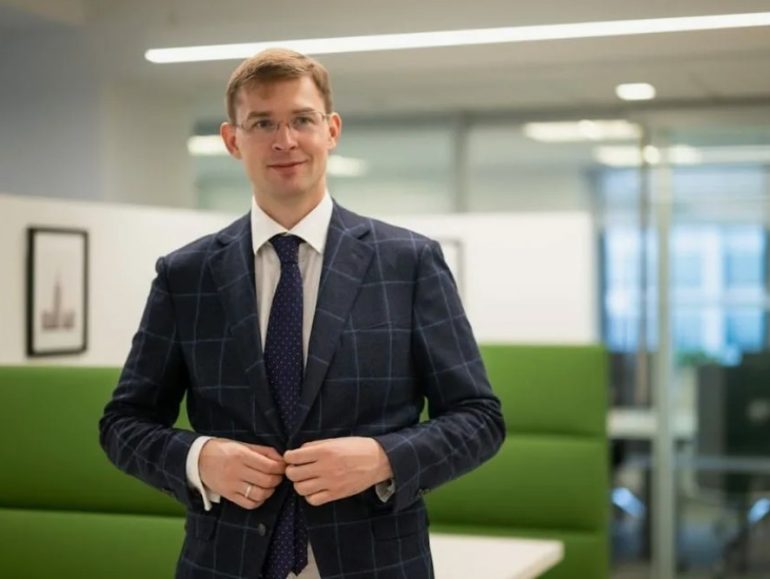
From broker to digital backbone
When Freedom Holding first appeared on the radar of international investors, it looked like another ambitious broker giving access to foreign stock exchanges from an emerging market. Today, the company presents itself very differently: as a technology group that wants to become part of the economic infrastructure in the countries where it operates. In interviews and public speeches, Timur Turlov describes this shift as a move from selling standalone financial products to building a fabric that connects households, businesses and the state. That fabric includes banks, insurance companies, payment systems, telecom services, data centers, lifestyle platforms and a single digital environment that ties them all together.
Ecosystem instead of single products
The foundation of this transformation is the ecosystem model that the group is assembling around its financial core in Central Asia and other regions. For clients it means that a checking account, a brokerage portfolio, loans, insurance policies and even mobile communications can live inside one digital space rather than in separate silos. This approach allows the company to see the full financial life of a person or business and build services around real behavior, not abstract profiles. For the economy, such integration turns the group into a platform through which payments flow, savings are allocated and investments reach companies that need capital.
The role of the SuperApp
At the center of this model lies a so-called SuperApp that combines banking, investing, payments, insurance and consumer services in a single interface. Through it, users can pay bills, transfer money, top up investment accounts, buy tickets or manage subscriptions without constantly switching between applications. This constant presence in daily routines is what gradually turns the company into infrastructure: it becomes a default channel for routine transactions, not just for rare investment decisions. Once that habit is formed, it is much easier for the group to introduce new services that immediately receive scale thanks to the existing user base.
Digital rails for money and data
Another layer of the strategy is less visible to the public but crucial for the long-term ambition of becoming a backbone of the digital economy. The group is investing in data centers, cloud infrastructure and tools for artificial intelligence that can serve both its own business and external customers. In partnership with global technology vendors and local authorities, it supports projects aimed at building sovereign computing capacity so that critical data and services remain within national jurisdictions. For governments this is attractive because it helps reduce dependence on external infrastructure, while for the holding it creates an additional source of revenue and strengthens its position as a strategic technology partner.
Connecting markets and regions
The founder often emphasizes that digital infrastructure is valuable only if it connects people and companies across borders, not just within one city or country. That is why the group is developing unified technological platforms for its banks and brokers in different jurisdictions, from Central Asia to Europe. The goal is to let clients move money and invest across these markets with as little friction as possible, while staying inside one familiar environment. By doing so, the company tries to become a bridge between financial systems, making cross-border flows faster, cheaper and more transparent than they would be through traditional channels.
Why this matters for the economy
For local economies, the emerging ecosystem around the holding can play several roles at once: it is a distributor of credit, an organizer of capital markets and a provider of digital tools for everyday business operations. Small and medium enterprises gain access to online banking, acquiring and financing on terms that would have been difficult to negotiate with fragmented service providers. Households receive seamless access to savings and investment products that help channel their money into real projects instead of leaving it idle. Over time, this can support the development of domestic capital markets and reduce the outflow of funds into foreign systems that do not contribute to local growth.
- Financial services, telecom and e-commerce are integrated into a single digital ecosystem.
- The SuperApp becomes a daily gateway for payments, savings and investments.
- Cloud and AI projects create local technological infrastructure for the digital economy.
- Unified platforms link multiple countries and simplify cross-border capital flows.
- Businesses and households gain easier access to funding and modern financial tools.
The founder’s long-term bet
Behind these projects is a belief that future financial champions will be those who manage to become part of the basic digital layer of the economy rather than remain narrow specialists. Timur Turlov uses the holding as a vehicle for this experiment, combining classic financial services with technology, media and consumer platforms under one umbrella. For now, the model is still evolving and faces the usual challenges of regulation, competition and scaling across different cultures and markets. Yet if the plan works, the group could end up not merely as a successful broker or bank, but as one of the key digital rails on which everyday economic life quietly runs.