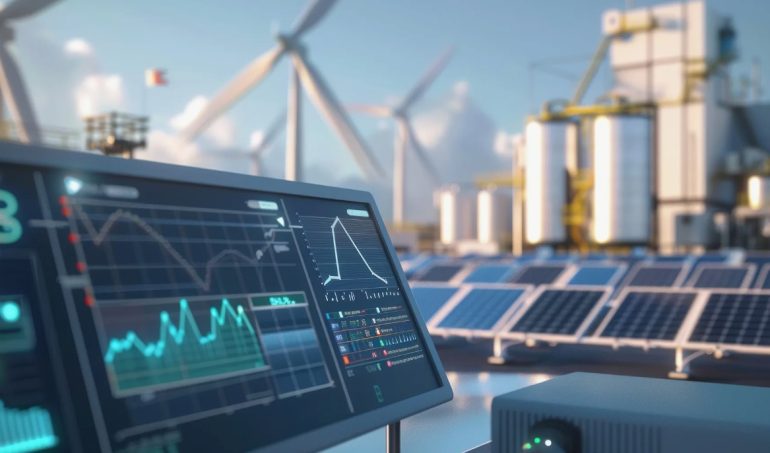
In the current landscape of global energy transition and volatile resource markets, optimizing consumption has evolved into a strategic priority for any large-scale business operation. Industrial enterprises, agricultural holdings, and major infrastructure facilities are increasingly forced to find a delicate balance between scaling production volumes and minimizing expenditures on electricity, gas, and fuel. At this critical juncture, professional guidance becomes indispensable. The expertise provided by P&B Energy Consulting empowers companies not only to adapt to rapidly changing legislation but also to implement innovative resource management models.
Effective energy consulting identifies hidden losses—which often account for up to 20% of operational costs—and develops a customized roadmap for transitioning to renewable sources or integrating smart monitoring systems. This shift is not merely a nod to environmental trends; it is a direct pathway to enhancing product competitiveness in both domestic and international markets.
The Role of Energy Audits in Optimizing Business Processes
The first and most critical step toward real savings is conducting a comprehensive energy audit. This detailed investigation of all engineering systems allows a business to understand its actual consumption profile. Without clear analytics, any investment in new equipment may prove ineffective, as the root problem often lies not in outdated machinery but in incorrect operational modes or integrity breaches in thermal and electrical networks. A systematic approach to an energy audit ensures that every decision is data-driven and aligned with the long-term goals of the enterprise.
A professional energy audit typically focuses on several key areas:
- Contractual Analysis with Suppliers: Reviewing tariff conditions and limits to ensure they match the actual needs of the enterprise and help avoid unnecessary penalties.
- Instrumental Surveying: Utilizing thermal imagers, ultrasonic detectors, and power quality analyzers to locate leaks and irrational loads within the system.
- Renewable Energy Potential Assessment: Determining the technical feasibility of installing solar power plants or battery energy storage systems (BESS).
- Digital Consumption Modeling: Creating predictive schedules that allow for the procurement of energy resources at the most favorable prices on “day-ahead” markets.
Implementing Energy Management Systems via ISO 50001
For large corporations, a one-time audit is only the beginning of a much larger journey. To achieve sustainable results, it is necessary to build a cohesive energy management system integrated into the company’s overall management structure. Implementing the international ISO 50001 standard makes the energy-saving process continuous and controllable. This involves appointing responsible personnel, establishing regular reporting cycles, and constantly searching for opportunities to improve energy efficiency at every stage of the production cycle.
By adopting professional energy management, companies gain significant advantages:
- Reduction in Production Costs: Direct savings on energy resources make the final product more attractive to consumers and increase profit margins.
- Reputational Enhancement: Adhering to ESG (Environmental, Social, and Governance) principles opens doors to preferential lending and international grant programs.
- Minimization of Emergency Situations: Constant monitoring of loads allows for the early detection of wear and tear on critical equipment components.
- Transparency of Expenditures: Management receives clear reports on where every kilowatt-hour is spent, eliminating the possibility of irrational resource use.
Innovation and Autonomy through Green Technologies
Today, energy efficiency is inseparable from the use of “green” technologies. Installing internal generating capacities, such as rooftop solar stations or biogas plants, allows enterprises to become partially or fully energy-independent. This is particularly vital in environments with potential grid restrictions or sharp price fluctuations. Modern consulting firms support these projects from the pre-feasibility stage to commissioning and obtaining all necessary licenses.
Furthermore, digitalization plays a transformative role. The use of IoT sensors and artificial intelligence algorithms enables the automatic control of lighting, ventilation, and heating in industrial premises. Smart systems can independently reduce consumption during peak load periods, allowing businesses to participate in Demand Response programs and receive additional financial preferences.
In conclusion, energy consulting is an investment that pays off in the shortest possible timeframe. Collaboration with experienced experts allows a business not just to save money, but to transform its energy strategy into a tool for active growth. In a world where energy prices are constantly rising, the winner is the one who knows how to use resources most rationally. A professional approach to every detail—from choosing a supplier to modernizing electric motors—creates a solid foundation for the stable development of an enterprise for decades to come, ensuring both environmental responsibility and financial resilience even in the most challenging times.