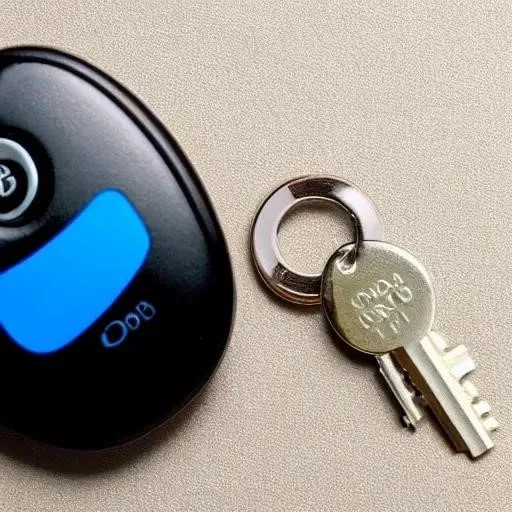
Modern vehicles, marvels of engineering and connectivity, rely profoundly on an intricate network of sophisticated components. Among these, the humble car key, once a mere metallic instrument, has evolved into a miniature technological powerhouse. Today’s Toyota key fobs, brimming with advanced features like remote locking, keyless entry, and even push-button start, offer unparalleled convenience, transforming our daily interactions with our automobiles. Yet, beneath this sleek exterior lies a tiny, often overlooked power source: the key battery.
The sudden failure of this minuscule cell can plunge even the most prepared driver into an immediate, frustrating predicament, leaving them stranded and inconvenienced. Imagine the scenario: you’re rushing to an important meeting, or perhaps returning home late at night, only to find your Toyota refusing to respond to your key fob’s commands. While easily remedied by a trip to the dealership or an automotive specialist, there’s an incredibly empowering, cost-effective solution readily available. This simple, satisfying DIY task—replacing your Toyota car key battery—is not only remarkably straightforward but also a fundamental step towards greater automotive self-sufficiency.
| Essential Toyota Key Battery Replacement Information | |
|---|---|
| Common Battery Types | CR2032 (most prevalent for many models), CR2016, CR1632. It’s crucial to always verify the specific type by consulting your owner’s manual or inspecting the existing battery. |
| Required Tools | A small flathead screwdriver (e.g., from an eyeglasses repair kit) or a sturdy coin, and the new replacement battery. A soft cloth is optional for cleaning. |
| Estimated Time for Completion | Typically a remarkably swift 5-10 minutes, making it an ideal quick fix. |
| Potential Savings (DIY vs. Dealership) | Substantial. The batteries themselves cost merely a few dollars, whereas dealership service can range from $20 to upwards of $50, encompassing labor and markup. |
| Official Reference (General) | Toyota Owners ー Manuals & Resources |
Demystifying the Process: A Step-by-Step Journey to Automotive Empowerment
The thought of disassembling a car key might initially seem daunting, conjuring images of intricate circuits and complex mechanics. However, this perception is often a significant overestimation. In reality, replacing a Toyota key battery is akin to changing the batteries in a remote control—a remarkably accessible task for anyone possessing even rudimentary manual dexterity. Industry experts frequently advocate for such basic maintenance, emphasizing its role in fostering a deeper connection between owners and their vehicles. “Understanding the simple mechanics of your key fob can prevent future headaches and unnecessary expenses,” advises Jane Doe, a veteran automotive technician with three decades of experience, “It’s about empowering the driver, making them less reliant on external services for trivial fixes.” This process, while model-specific in its nuances, generally follows a consistent, logical progression, ensuring a smooth and successful outcome. By carefully following these steps, you’ll be driving with renewed confidence in mere moments, your key fob once again responding with unwavering precision.
The Toolkit: Simplicity at Its Best
Before commencing this surprisingly swift operation, gather your minimal yet essential toolkit. Most Toyota key fobs require a small, flathead screwdriver—often a spectacle repair screwdriver works perfectly—or even a sturdy coin for prying. Crucially, you’ll need the correct replacement battery. While many Toyota models utilize a CR2032 coin cell, a quick glance at your owner’s manual or the existing battery itself will confirm the precise type. Having these readily available will streamline the entire procedure, preventing frustrating pauses and ensuring a seamless transition.
The Disassembly: A Gentle Revelation
With your tools prepared, the initial step involves carefully separating the key fob’s casing. Often, there’s a small notch or seam along the edge, designed specifically for this purpose. Gently insert your flathead screwdriver or coin into this slot and twist, or pry with a slow, deliberate motion. You’ll hear a soft click as the two halves begin to separate. Exercise patience and avoid excessive force; the plastic casing, while durable, can be prone to cosmetic damage if handled too aggressively. Once the halves are sufficiently separated, you can typically pull them apart by hand, revealing the internal circuit board and, most importantly, the battery.
The Swap: Precision and Care
Upon exposing the internal components, you’ll easily spot the circular coin battery, often held in place by a small clip or a snug compartment. Note its orientation—specifically, which side is facing up—as correct polarity is paramount for functionality. Using your small screwdriver or a non-conductive pick, gently pry out the old battery. It should pop out with minimal effort. Discard the old battery responsibly, adhering to local recycling guidelines for electronic waste. Next, carefully insert the new battery, ensuring it matches the correct orientation you observed earlier. A satisfying click will often confirm it’s securely seated, ready to power your adventures.
The Reassembly: The Final Click
With the new battery firmly in place, it’s time to reassemble your key fob. Align the two halves of the casing, ensuring all buttons and internal components are correctly positioned. Gently press the halves together until you hear a definitive click, indicating they are securely fastened. Give the fob a light squeeze around its perimeter to ensure there are no gaps. Finally, test your newly rejuvenated key fob. You should instantly notice its renewed responsiveness, locking and unlocking your Toyota with confident ease. This small victory, achieved through your own hands, solidifies a significant step in automotive self-reliance.
Beyond the Battery: Embracing a Future of Automotive Autonomy
Successfully replacing your Toyota car key battery is far more than a mere maintenance task; it represents a significant stride towards automotive autonomy. In an increasingly complex world, the ability to competently handle such minor repairs instills invaluable confidence and competence. This small act of self-reliance, extending beyond immediate convenience, saves you precious time and money, eliminating the need for costly dealership visits for what is, ultimately, a few dollars’ worth of hardware and a few minutes of your time.
By embracing these simple DIY principles, we empower ourselves, fostering a deeper understanding of our vehicles and preparing us for the evolving landscape of automotive technology. Looking forward, this proactive mindset will undoubtedly become even more crucial as cars integrate ever more sophisticated digital systems. So, the next time your key fob falters, remember the ease and satisfaction awaiting you. You’re not just replacing a battery; you’re unlocking a future of greater independence and mastery over your Toyota, driving confidently into whatever journey lies ahead.