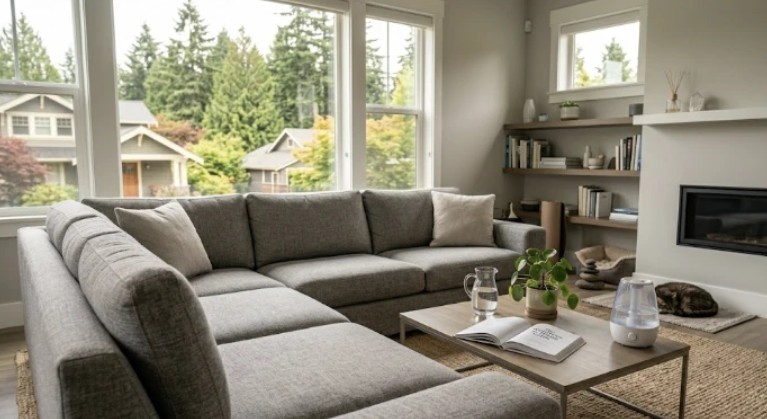
Something fundamental has shifted in how Americans think about their homes. Homeowners are no longer simply fixing what breaks. They’re investing in the condition of their living spaces proactively, treating their homes as environments that actively affect their health, their comfort, and their financial future.
This isn’t the home improvement trend of a previous generation, which was largely cosmetic — new countertops, fresh paint, updated fixtures. What’s emerging now goes deeper. It’s a home wellness mindset, and it’s redefining the services homeowners prioritize, the products they buy, and the professionals they hire.
From Reactive to Proactive: The Core Shift
For most of the twentieth century, residential maintenance operated on a reactive model. You painted when the walls looked bad. You called the plumber when something leaked. You replaced the sofa when it was clearly worn out. Maintenance was triggered by visible failure, not by a philosophy of prevention.
That model is giving way to something more deliberate. A growing segment of American homeowners now approaches home maintenance the way health-conscious consumers approach their bodies: with regular attention and preventive care. The U.S. home services market reflects this shift — professional maintenance and cleaning services are among its fastest-growing subcategories, driven not by a spike in home damage but by a change in how homeowners define necessary upkeep.
Indoor Air Quality: The Invisible Priority
One of the most significant forces driving the home wellness trend is a growing consumer awareness of indoor air quality. Research on dust mites, VOCs off-gassing from furniture, particulate matter trapped in carpets and upholstery, and mold spores in damp environments has reached mainstream consumer consciousness. What was once a niche concern for allergy sufferers is now a standard consideration for health-aware homeowners.
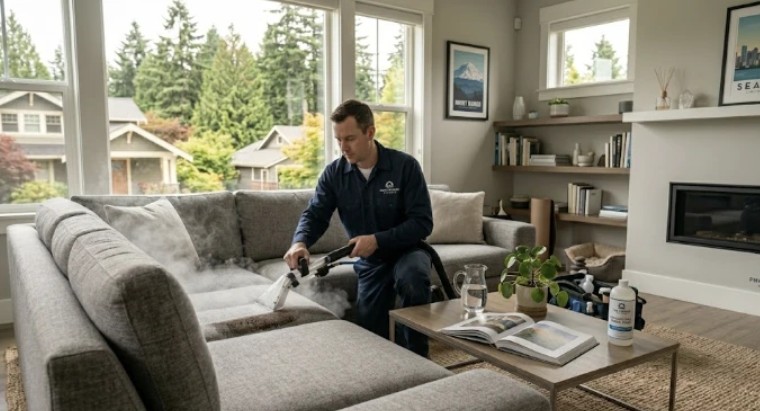
Upholstered furniture is among the most significant reservoirs for indoor pollutants in the average home. A standard fabric sofa accumulates dust mites, skin cells, pet dander, and fine particulates at a rate that no household vacuum fully addresses — the fibers trap material at depths that surface cleaning cannot reach. Professional extraction cleaning removes contaminants from the full depth of the fabric pile, addressing what regular vacuuming leaves behind.
This has fundamentally repositioned professional upholstery cleaning in the consumer mind. It’s no longer primarily a cosmetic service. It’s a health investment, and that reframing has significantly expanded its market well beyond households that simply want their furniture to look good.
The Longevity Investment: Why Maintenance Economics Have Changed
A parallel driver is a fundamental change in furniture economics. The average cost of residential furniture has increased substantially over the past decade, driven by the direct-to-consumer market and a cultural shift toward fewer, higher-quality purchases. When a household sofa represents $1,500 to $3,500 rather than $400, the logic of professional maintenance changes completely. Annual cleaning at $100 to $200 that extends the life of a premium piece by several years is a clear return on investment — far cheaper than premature replacement.
Regional Amplifiers: The Pacific Northwest Case Study
These national trends are particularly pronounced in certain regional markets. The Seattle metro area — encompassing cities like Bothell, Bellevue, Kirkland, Redmond, and extending north into Snohomish County — presents a concentration of factors that amplify every element of the home wellness trend.
High household incomes, driven by the technology industry, support above-average spending on professional home services. A strong regional environmental ethic creates preference for eco-friendly providers using biodegradable, non-toxic solutions. The characteristic Pacific Northwest climate — wet and humid for much of the year — elevates mold and mildew risk in upholstered furniture and drives higher rates of moisture-related fabric degradation, making professional deep cleaning genuinely necessary rather than optional.
The short-term rental market adds another layer. King and Snohomish counties have significant Airbnb concentrations, creating commercial demand for professional fabric cleaning alongside the residential base. Property managers treat upholstery cleaning as a standard operating cost. A well-established Bothell WA upholstery cleaning service now serves traditional homeowners, rental operators, and health-motivated households who treat furniture care as a non-negotiable part of their home wellness routine.
The Smart Home Maintenance Priority Stack
For homeowners navigating the home wellness trend practically, the research points toward a consistent priority framework.
Air quality fundamentals first. Professional cleaning of primary upholstered surfaces — sofas, chairs, area rugs, mattresses — addresses the highest-volume sources of indoor air quality degradation, with the broadest health impact and most direct effect on daily home comfort.
High-contact surfaces second. Mattresses, frequently used seating, and primary rugs are where household members spend the most time in direct contact. Professional cleaning annually — more frequently for homes with children, pets, or allergy sufferers — maintains them at a standard ordinary vacuuming cannot achieve.
Longevity protection for premium pieces. High-value upholstered furniture deserves the same proactive attention as other major household assets. Regular professional cleaning and prompt spot treatment extend the serviceable life of premium pieces by years — a straightforward financial calculation when replacement costs are significant.
The Digital Accessibility Factor
One reason the home wellness trend has accelerated beyond its demographic drivers is a structural change in how professional services are discovered and booked. Search engines surface specific local providers within seconds, review platforms build confidence, and online booking removes scheduling friction entirely. The result: latent demand from homeowners who wanted professional maintenance but never acted on it now converts at a much higher rate. The trend is reaching the broad middle of the market, not just motivated or affluent households.
What the Trend Means for Homeowners Now
The home wellness trend doesn’t require a complete overhaul of how households operate. For most homeowners, the practical implication is modest: replace the wait-until-it’s-broken approach with a simple annual maintenance schedule covering the surfaces most critical to indoor health and furniture longevity.
Professional upholstery cleaning once or twice a year. Mattress cleaning annually. Prompt spot treatment for incidents. Fabric protector on high-value pieces. These are not expensive or complicated interventions. They are, increasingly, what informed homeowners do — and the homes that look as good in ten years as they do today will be the ones where this shift from reactive to proactive has already happened.